
August 31, 2026: Theatre Yesterday and Today, by Ron Fassler.
One of the most colorful of men, Alan Jay Lerner was a librettist and lyricist from the golden age of the American musical (My Fair Lady and Camelot) with a penchant for theatricality that fit him like the white gloves he often wore to prevent him from chewing his cuticles until they bled. He was a mixture of many things: erudite breeding, fastidiousness, intelligence, neurosis... he was even (for a time) a pugilist. Born into wealth and privilege, he befriended John F. Kennedy at prep school and Leonard Bernstein at Harvard. He had eight wives, summed up best by the famous line that went: “When Alan marries someone, that’s just his way of saying goodbye.” A number of biographies have been written on him, as well as one he wrote himself, and they each tell many different stories.

Lerner was not only a first-rate lyricist, but also wrote the librettos for all thirteen of his musicals (for better or for worse), giving the venerable Oscar Hammerstein II a run for his money (Hammerstein found his name on more than thirty-five musicals he provided lyrics to, with The Sound of Music the sole exception). Fellow lyricist Sheldon Harnick wrote “Because Alan was a skilled playwright, as well as a lyricist, his lyrics are particularly appropriate for the characters who sing them.”
First, a confession on a personal note: with so many lyrics to choose from among Lerner’s best, I have always had a soft spot in my heart for a stanza from the title song for Gigi, which brought him and his partner Frederick (Fritz) Loewe, the 1958 Academy Award for Best Song:
Gigi, while you were trembling on the brink
Was I out yonder somewhere blinking at a star?
Oh Gigi, have I been standing
Up too close or back too far?
I know it’s simple, but there is something about the way those words sit on the music and the yearning and self-realization the character of Gaston is undergoing in the moment that always sends me, no matter how many times I listen to Louis Jordan talk-sing it (or Lerner himself — a marvelous interpreter of his own lyrics).

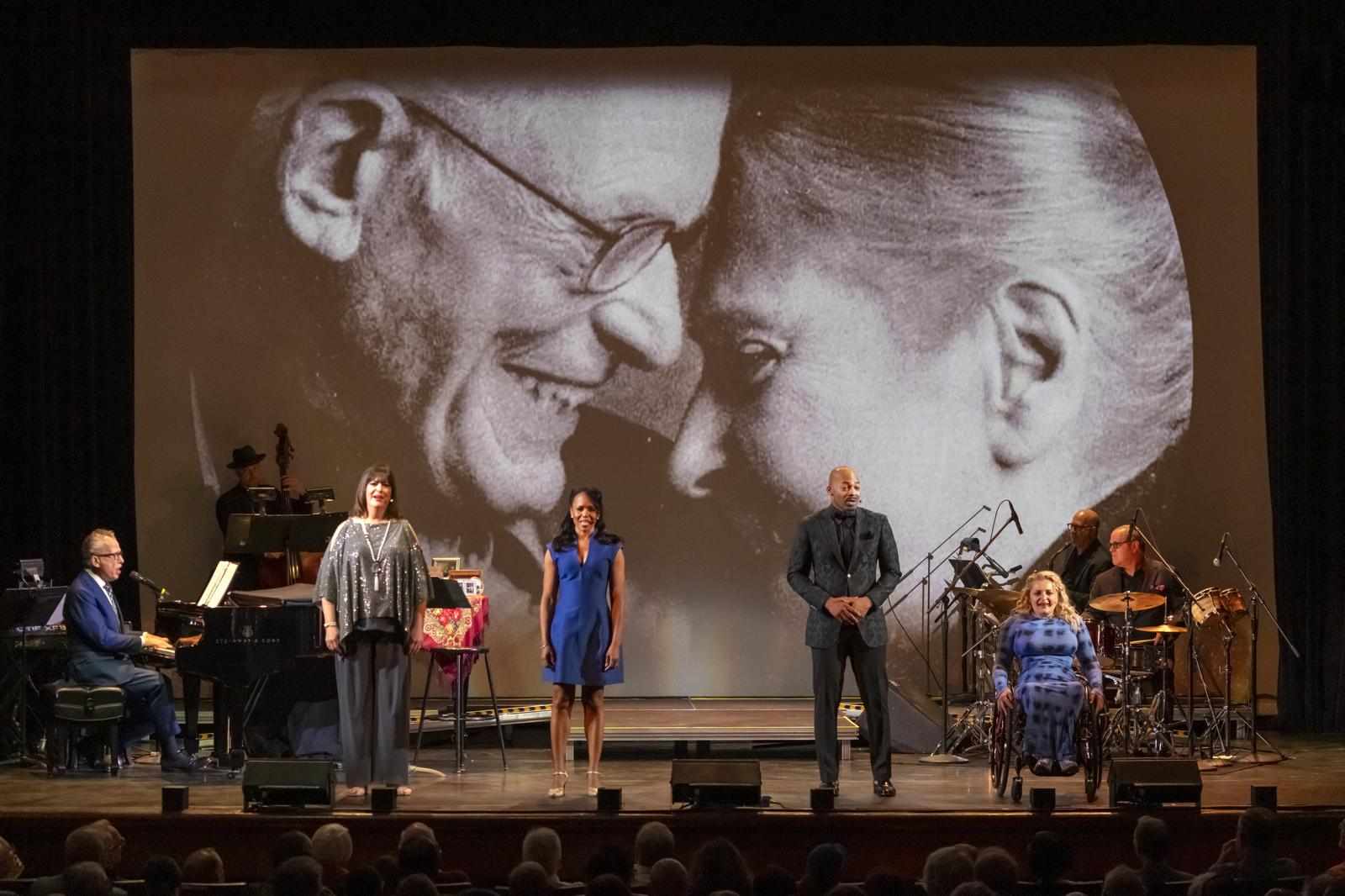
To that point, of all the Broadway songwriters, be they composer, lyricist or both, I believe Alan Jay Lerner to be one of the finest singers of his own work. As a vocalist, the words flow forth from the depths of his soul and I treasure a recording that was made of an afternoon in 1971 at the 92nd Street YMCA in Manhattan where, along with three singers, Lerner narrated the story of his life in the theatre. It had been more than a decade since he had created a hit musical, but here was an acute reminder that left little doubt his legacy is an important one. It is revelatory to hear Lerner perform such songs as My Fair Lady’s “I’ve Grown Accustomed to Her Face" and “Come Back to Me” from On a Clear Day You Can See Forever.
That song in particular (“Come Back to Me,”) is one I never tire of listening to. Even though it was written for a specific character in a very specific show, none of that mattered when it became a hit single, as performed by dozens of outstanding artists of the 1960s, both male and female, who sang it in their nightclub acts and on television’s bounty of musical variety programs such as The Ed Sullivan Show and The Hollywood Palace. I’m obsessed with its bouncy, seductive tune that offers a built-in swagger to all who covered it, and the fun each singer has with its lyrics, clever and surprising in their rhyming, even after a thousand listens. But I’m convinced no one does it better than Lerner himself, which you can listen to below:
Though he worked with others after their partnership ended, Fritz Loewe was unquestionably the best fit. Their work on Paint Your Wagon, Brigadoon, My Fair Lady, Gigi and Camelot are stellar. Loewe, seventeen years senior to Lerner and with heart disease, retired after the tumultuous Camelot in 1960. Later, in the early 1970s, Loewe was coerced by Lerner to come back and write some new songs for a Broadway production of Gigi and also for a film score to Antoine de Saint-Exupéry’s The Little Prince. Few could blame Loewe for seeking some peace, as Lerner was not an easy man with whom to collaborate. Not only did Lerner torture himself over every parsed syllable, but he was a procrastinator par excellence.
The first person Lerner sought to work with after Loewe’s retirement was Richard Rodgers, himself in search of a new partner after the death of Oscar Hammerstein. An original musical idea of Lerner’s about a girl with extra-sensory perception felt like fresh territory for them both to explore, but Rodgers became deeply frustrated (and agitated) by Lerner’s inability to show up at work meetings. Apparently, parts of nine songs were written before Rodgers quit what would eventually become On a Clear Day You Can See Forever, with music by Burton Lane. I’ve always been interested to hear what the lyrics of the title song would sound like set against a Rodgers melody, but any evidence of it are believed to no longer exist.

Lerner’s erratic behavior had a great deal to due with a charlatan named Max Jacobson, a medical doctor with a diverse client list that included everyone from Salvador Dali to John F. Kennedy, and to whom he administered amphetamines in a cocktail of his own devising He was the one responsible for turning Lerner into what was then commonly known as “a speed freak.” All of Lerner’s partners post-Loewe suffered through this period beginning with Andre Previn (who never partnered up to write another Broadway musical in the fifty years until he died); Charles Strouse (Dance a Little Closer, or Close a Little Faster, as it was known since it closed in one night), who wrote in his autobiography that the most useful advice he’d received on the collaboration was “don’t ever take a pill from Alan Jay Lerner;” Leonard Bernstein (the disastrous 1600 Pennsylvania Avenue), which ending his flirtations with Broadway for good, sending the composer back to classical music; and Burton Lane (Carmelina), with“One More Walk Around the Garden,” perhaps Lerner’s last great song (and Lane’s last show, even though he died twenty-two years later). Recognizing a pattern here? Ironically, if Lerner’s health had not worn out, one final partner might have resulted in a grand exit. Despairing of the state of his health, he wrote to Andrew Lloyd Weber: “Who would have thought it? Instead of writing The Phantom of the Opera, I end up looking like him.”
Yes, Lerner was on board to work with Lloyd Weber on the monster hit that was Phantom. Lerner went further, writing: “But, alas, the inescapable fact is I have lung cancer. After fiddling around with pneumonia they finally reached the conclusion that it was the big stuff... I am deeply disconsolate about The Phantom and the wonderful opportunity it would have been to write with you. But I will be back! Perhaps not on time to write The Phantom, but as far as I am concerned this is a temporary hiccup. I have a 50/50 chance medically and a 50/50 chance spiritually. I shall make it. I have no intention of leaving my beautiful wife, this beautiful life and all of the things I still have to write. As far as I am concerned it is a challenge, and I fear nothing.”
This letter saddens me no end. Richard Stilgoe and Charles Hart’s minimal contributions as the lyricists of record have little to do with Phantom’s worldwide success. It's uncertain whether with Lerner on board, all involved might have risen to a higher level of craft. But it certainly wouldn’t have lessened the impact and grip Phantom has had on its audiences for nearly forty years. What it would have assuredly done for Lerner was provide a sendoff with a moneymaker even bigger than My Fair Lady. What a tribute that would have been to a career in the theatre well-lived.
Ron Fassler is the author of The Show Goes On: Broadway Hirings, Firings and Replacements. For news and “Theatre Yesterday and Today” columns when they break, please subscribe.






Write a comment ...