
June 1, 2026: Theatre Yesterday and Today, by Ron Fassler.
With the month of May in the rearview mirror, I’ve taken the last few days to look back at eighty years ago and May of 1946. This was when London’s Old Vic Theatre came to New York to present a series of classic plays in six weeks of repertory: Shakespeare’s Henry IV, Parts 1 and 2, Chekhov’s Uncle Vanya and, on a double bill, Sophocles’ Oedipus and Richard Brinsley Sheridan’s The Critic, (he of such witty Restoration comedies as The Rivals and The School for Scandal). The company had already played the West End, Paris, Hamburg, and even a British military post at the site of the remains of the concentration camp at Belsen, but Broadway still beckoned. It had been less than a year after the end of World War II and a celebration of a return to normalcy was not only welcome, but necessary. It’s important to note that the Old Vic structure itself had been bombed to near ruin in 1942, so the comeback didn’t take place at its historic home, as it was still undergoing repairs. What the Old Vic provided at the time was an emotional healing for not only the theatre community, but for the country as a whole.
Sounds like something we could very much use today.
On its visit to New York in 1946, the Old Vic performed at the New Century Theatre, located at 7th Avenue and 58th Street. Demolished in 1962, it once held 1,700 seats which, were it still standing, would make it the third largest Broadway theater after the Gershwin and the St. James. Led at the time by a triumvirate that included the actor Ralph Richardson and the stage director John Burrell, it was Olivier who provided its spiritual soul. Recently knighted by the King at thirty-nine years-old—the youngest member of the acting profession to ever receive that honor—Olivier would later be elevated to the peerage by Queen Elizabeth II in 1970 and dubbed Baron Olivier of Brighton, allowing him to sit in the House of Lords. Very heady stuff for a minister’s son from Dorking, Surrey.

To essay Lord Olivier’s remarkable life here would be a foolish task. Instead, why not focus on his particular triumphs with this Old Vic engagement eight decades ago; a mighty testimony to his long and brave stage career. It was his idea to depict the title characters in Oedipus and The Critic; plays so diverse in tone and style that they left critics on both sides of the Atlantic inventing new adjectives to praise Olivier’s audaciousness.
Anyone possessing even a small amount of knowledge of 5th century-era Greek tragedies is aware of the tale of Oedipus; a man prophesied to kill his father and marry his mother. Finally confronted with the horror, he gouges out his eyes in an ending never to be forgotten (the image of British actor Mark Strong performing this feat in the recent revival of Oedipus this season will linger with me for the rest of my days). Pairing such a Greek tragedy with the far lesser known The Critic, a 1779 satirical comedy, couldn’t have been further apart in style and tone. It is centered on the ridiculous Mr. Puff, a playwright, gossip columnist and press agent rolled into one who drives the engine of this satire, based on an earlier Restoration play, George Villiers’ The Rehearsal. Only an actor with the sheer size and impudence of an Olivier knew how effective he could be as Oedipus, stunned and bleeding at its conclusion, then show off in stark contrast the comedic ramblings of Mr. Puff, who, at the finish, ascends to the rafters on a cloud.


1946 was a particularly adventurous time in Olivier’s career. Only a year earlier, he had premiered his film version of Shakespeare’s Henry V, the first in which he starred and directed. Two years later, his film of Hamlet, which he also directed and starred in, would win him the Academy Award as Best Actor, the first time anyone directed themselves to an Oscar. It also took home Best Picture, the first of any non-American production to do so. Performing these plays in rep marked Olivier’s return to Broadway for the first time in six years, since he starred opposite his then-wife Vivien Leigh in Romeo and Juliet. For that production, in a less-than-subtle fashion, the credits listed Olivier as star, director, producer, co-composer of its music, as well as a credit for “production designer,” even though separate people were cited for actually designing the sets, lighting and costumes.
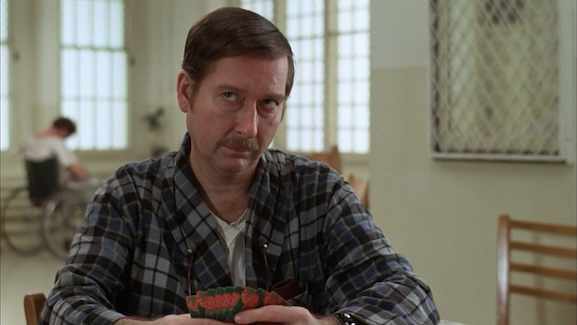
Not being one to shun the spotlight, Olivier chose to appear in all the Old Vic shows alongside his co-artistic director and good friend Ralph Richardson. Winning hearts of the critics on both sides of the Atlantic, Richardson’s Falstaff in Henry IV, Part One and Henry IV, Part Two are still considered among the finest interpretations any actor has undertaken as Falstaff. Olivier took for himself the juicy role of Hotspur in Part One and, in Part Two, portrayed the ancient Justice Shallow in a scene-stealing turn (almost unrecognizable in the photo below). In Uncle Vanya, also a part of this stunning repertory, Richardson played the title role while Olivier was Astrov, the conflicted country doctor (Olivier would again play the part opposite Michael Redgrave in Chichester, England, later filmed and released in 1963).


In Oedipus and The Critic, Richardson took on secondary roles leaving Olivier to carry the evening as a tour de force for himself. However, he wasn’t so vain as to fill the company with pedestrian talents. He brought over from England such future luminaries as Joyce Redman, nominated for an Academy Award as Emilia in Olivier’s film of Othello, and eventual two two-time Tony Award winners Margaret Leighton and George Rose. But you have to read the Playbill very carefully to look for one supernumerary among the large cast: Julie Harris, then at the beginning her long career; one that would award her six Tonys before her passing in 2013.

Oedipus was staged by Michel St. Denis and The Critic by Miles Malleson (who also took on a role in the show), but there was no question the evening belonged to Olivier. “Those who were there when the scream was sounded offstage said they could still hear it decades later,” wrote Ben Brantley in a 2001 piece for the New York Times, referring to what audiences heard prior to Oedipus entering with his eyes ripped from their sockets. Olivier’s blood-curdling cry has gone down as a moment (like so many in the theatre) that you had to have been present for in order to comprehend its chilling power and effectiveness. As the distinguished American critic John Mason Brown wrote: “Mr. Olivier’s Oedipus is one of those performances in which blood and electricity are somehow mixed. It pulls lightning down from the sky.”
Of course, during that particular May in 1946 theatergoers could not only see Olivier and Richardson for a top price of $6, but also the original productions of Oklahoma! and Carousel, Ethel Merman in Annie Get Your Gun, Laurette Taylor in The Glass Menagerie, Alfred Lunt and Lynn Fontanne in Terrence Rattigan’s O Mistress Mine, a revival of Show Boat at the old Ziegfeld Theatre (where it had originally opened in 1927), Pearl Bailey in Harold Arlen and Johnny Mercer’s St. Louis Woman, Judy Holliday in Born Yesterday, Gertrude Lawrence in Pygmalion, Frank Fay in Harvey, and Ray Bolger in the musical revue Three to Make Ready.
And that’s only half of what was playing.
So, if you were offered a trip in the proverbial Time Machine, but were told you only had a few hours to see one show, would you pick Olivier and Company? Or one of the above?
Tough choice, right?
Ron Fassler is the author of The Show Goes On: Broadway Hirings, Firings and Replacements. For news and “Theatre Yesterday and Today”columns when they break, please subscribe.


Write a comment ...